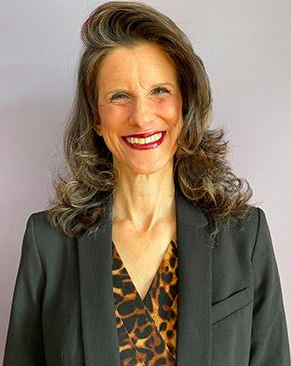
The Known, Unknown, and Unknowable: A Conversation With Dr. Helen Marlo
In psychology, the academic and clinical sides of the field are often seen as inhabiting two complementary yet completely separate worlds. Professors and researchers frequently lack the training, time, or interest in seeing patients. Things get even more complicated when an academic takes on a leadership position — deans, department chairs, and the like have little time for anything outside of their administrative duties.
But when Dr. Helen Marlo became dean of the School of Psychology at Notre Dame de Namur University (NDNU) in 2023, she promised her students she’d keep teaching as she had been since 1999. She followed through on that promise — and also kept up with her patients.
“I can’t imagine being a dean and a professor without doing clinical practice. I also think I practice better because I’m a dean and a professor,” she said. “There’s just something about that intersection of both worlds and the live connection with people.”
However, the many roles Marlo performs aren’t just evidence of an almost supernatural talent for navigating her professional life. They’re a testament to her ability to bring seemingly disparate aspects of the human experience together. Marlo uses this talent to enrich her field, serve her patients and community, and bring a unique level of nuance to the NDNU Master of Science in Clinical Psychology (MSCP) program.
Bridging the Gap Between the Clinical and the Spiritual in Clinical Practice
Dr. Marlo has been a practicing licensed clinical psychologist for about 30 years. In that time, she’s helped people navigate trauma, reproductive mental health issues, and the winding road to personal growth. But while she employs a wide range of evidence-based interventions to help her patients (some of whom have been with her almost her entire career) with their diagnosed mental health issues, that’s not all they want or need.
“A lot of my patients will say, ‘I’ve tried a bunch of other approaches and they helped me, but I really want to do a deeper dive. I really want to have greater meaning, greater wholeness, less suffering in my life. I want to grow as a person and develop myself as much as I can,’” she said. “I think that’s where I’ve been called, to support people in that journey.”
As a result of that calling, Marlo has spent years researching, writing about, and practicing within a field called depth psychology.
Depth and Clinical Psychology: Complements Not Opposites
Depth psychology focuses on helping people develop, achieve enduring growth and change, and alleviate their suffering by engaging with their unconscious mind and imagination. One of the most respected contributors to the field was Swiss psychiatrist Carl Jung. His vision of psychoanalysis included an expanded view of the conscious and unconscious mind, dreams, symbols, spirituality, and the empirically unknowable, all falling under the broad umbrella of depth psychology.
In 2011, Marlo became a certified Jungian psychoanalyst through the C.G. Jung Institute of San Francisco. This education and training provided her with a foundation that also supported her personal development, enabling her to help her clients tackle deeper, less conscious developmental, relational, existential, and spiritual issues.
“As a psychoanalyst, when patients come to me, they often want answers. They want to know what caused their issues and how to change them. We chip away at those layers and relate to them over time, which leads to understanding and behavior change,” she said. “However, as a psychoanalyst, we talk not only about the known and unknown but also the unknowable; that’s a pretty profound concept.”
On the surface, this approach seems to stand in stark contrast to clinical therapies such as cognitive behavioral therapy (CBT), which is used to help patients change their patterns of thinking and behavior. After all, the unknowable is by definition unmeasurable and, some might argue, unscientific.
But according to Marlo, when combined, depth and clinical psychology are quite powerful.
“I think having a marriage between the two is important,” she said. “I try to ground in both the conventional as well as the depth.”
One of the ways Marlo leverages the power of the clinical-depth partnership is through an approach she named and developed herself: synchronicity-informed therapy.
Synchronicity-Informed Therapy
Synchronicity refers to the connection between inner psychological states, including images, thoughts, and dreams, and external real-world events. Jung pioneered synchronicity as a psychological phenomenon, but it’s a concept that has been tackled in the sciences, humanities, and arts. It is present within cultures all across the world and throughout different time periods.
Marlo illustrates synchronicity with the example of thinking intensely about a former student from 15 years ago and then hearing from that student the next day. Another example is having a precognitive dream about an event that subsequently happens in the real world shortly after. In synchronicity-informed therapy, Marlo helps her patients attend to and draw meaning from these moments that can be applied to their current lives.
“Synchronicity-informed therapy is my way of saying, let’s honor those invisible connecting threads, and let’s use them to grow, develop, heal ourselves, heal our world, and alleviate suffering,” she said.
Marlo acknowledges that this idea may be a little too out there for some, so her integration of synchronicity-informed therapy is attuned to her patients and informed by their development, defenses, receptivity, and issues. However, she believes synchronicity is a quintessentially human process and doesn’t think people need to be spiritual gurus to experience or benefit from synchronicity.
“The more you learn to relate to your unconscious, the more you start paying attention to the unconscious, the more these synchronicities happen,” she said. “And so I feel like it’s a very natural process of the human mind.”
In fact, Marlo compares elements of synchronicity-informed therapy to a practice that’s already gained plenty of traction in the mainstream: mindfulness. At the end of the day, both practices are about investigating consciousness and one’s inner life —and how it colors one’s experiences and vice versa.
Discover Your Calling at NDNU
Throughout her career, Dr. Helen Marlo has deftly navigated the nooks and crannies of her field, all in the name of doing the most good for the greatest number of people. She says her colleagues at NDNU share and support her in that goal.
“In NDNU’s School of Psychology, we’re professors who practice what we teach,” she said. “I’m very grateful for NDNU, because it has always been mission-centered. Giving back to the community is core to its academic Mission, Vision, and Hallmarks for how we learn and educate. I can have my private practice and be the dean. They value and support both.”
In the NDNU Master of Science in Clinical Psychology program, students don’t have to wait until they have Marlo’s level of expertise to take part in that mission.
“We have almost a hundred practicum sites that students can choose from,” she said. “We don’t limit where you train. We emphasize real-world experience, taught by professors who are in the field, so people can make the most of learning by serving in the community.”
When it comes to the curriculum, Marlo says the MSCP program is equally conducive to helping students find their own niche.
“It’s a hard program to run because it is flexible, individualized, and students can go at their own pace. Students are mentored and supported to pursue their specific research and clinical interests. We cultivate an academic culture that encourages each student to, ‘Follow their path, follow their bliss,’” Marlo said. Her students become licensed marriage and family therapists, licensed professional clinical counselors, and unlicensed mental health professionals who apply their degrees in numerous fields: private practice, community mental health, research, policy, business, education, human services, and even unconventional areas like mood-minded nutrition.
“Many people and mental health professionals have a prejudgment about approaches, whether its psychoanalysis or CBT, as well as psychological diagnoses they don’t even understand. Countering this misunderstanding begins with applied, comprehensive, and innovative education and training programs. At this level, I think it’s important that students are exposed to different approaches by academics who are also doing applied work,” she continued. “There’s something valuable about every single approach.”
To find out about the depth-oriented, integrative, and applied Master of Science in Clinical Psychology (MS/CP) programs with emphases in Marriage and Family Therapy (MS/CP/MFT) and/or Licensed Professional Clinical Counseling (MS/CP/MFT/LPCC) at NDNU, fill out the form below to request more information today.
Recommended Readings
How to Become a Licensed Therapist
How Long Does It Take to Get a Psychology Degree?
Where Do Clinical Psychologists, Therapists, and Counselors Work