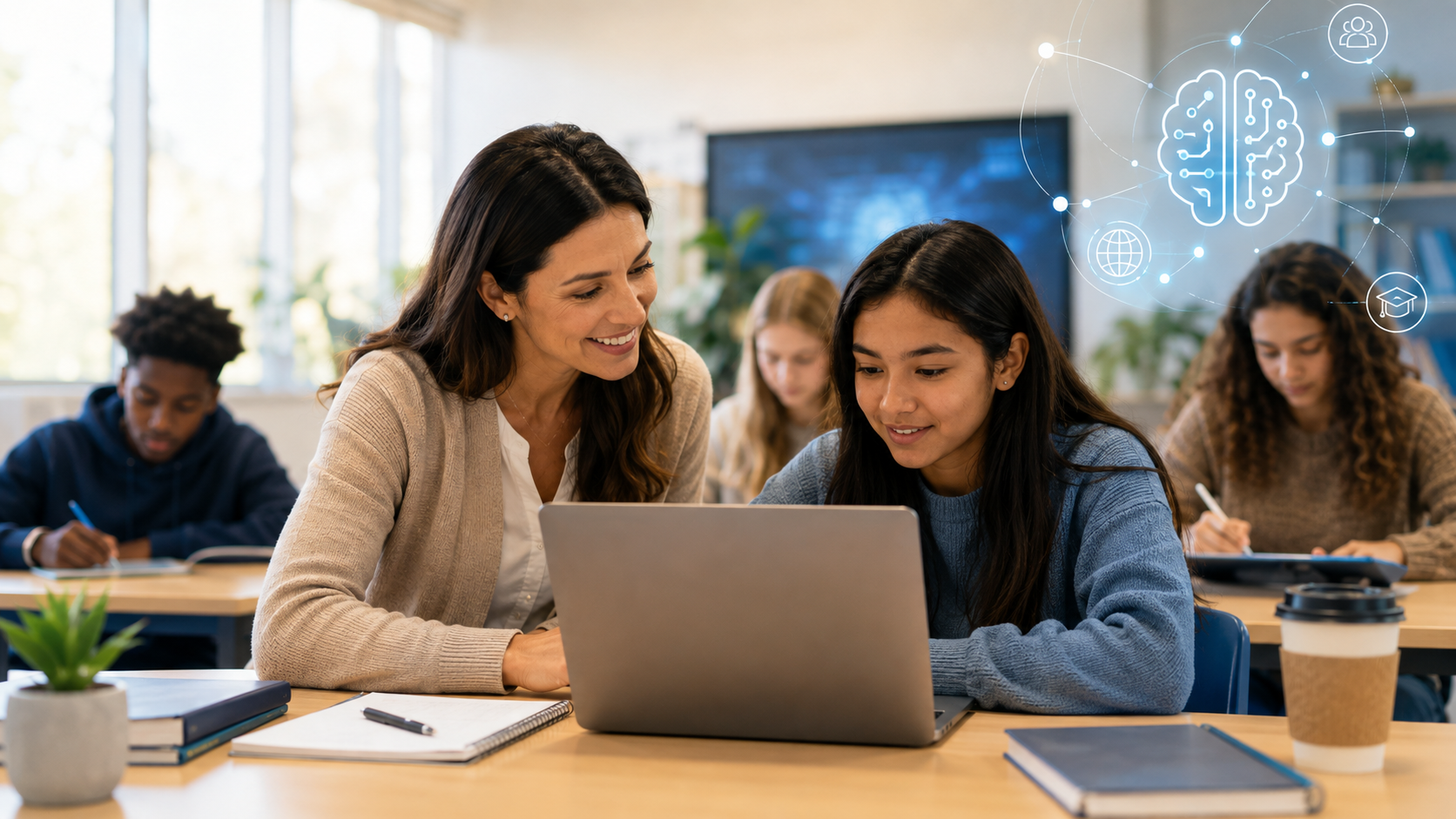
Artificial intelligence is rapidly becoming part of today's classrooms. From lesson planning and personalized learning to grading assistance and administrative tasks, AI has the potential to transform how educators teach and how students learn. But as these tools become more common, one question becomes increasingly important:
How do we ensure technology enhances teaching without replacing the human judgment, empathy, and relationships that define great educators?
At Notre Dame de Namur University's School of Education, we believe the future of teaching isn't about choosing between human intelligence and artificial intelligence. It's about preparing educators who know how to thoughtfully integrate AI while keeping people, purpose, and equity at the center of every decision.
Human Intelligence Comes First
Technology will continue to evolve, but the qualities that make exceptional educators remain constant.
Teachers make hundreds of decisions every day that require empathy, ethical reasoning, cultural awareness, and professional judgment. While AI can provide suggestions or streamline repetitive tasks, it cannot replace the relationships educators build with students or the nuanced decisions they make in real classroom environments.
That's why teacher preparation today must go beyond learning how to use AI tools. Future educators need the confidence to ask when AI should support learning, when professional judgment should take priority, how we ensure every student is treated fairly, and how technology can create greater access without sacrificing human connection.
Preparing teachers to answer these questions is becoming just as important as preparing them to teach curriculum.
AI Should Augment Teaching—Not Replace It
When used intentionally, AI can become a valuable teaching partner rather than a substitute for educators.
It can help teachers brainstorm lesson ideas, explore multiple instructional approaches, differentiate learning materials, reduce administrative workload, and support ongoing reflection and improvement.
The educator, however, remains the decision-maker.
Effective teachers evaluate AI-generated content, identify potential bias, adapt materials for their students, and ensure every instructional decision aligns with their professional values and the unique needs of their classroom.
Preparing Educators for Thoughtful Decision-Making
As AI becomes more integrated into education, teachers need more than technical skills—they need opportunities to develop sound professional judgment.
Future educators should learn how to evaluate AI-generated information critically, design lessons that prioritize equity and inclusion, protect student privacy and data, recognize bias in AI-generated content, balance innovation with ethical decision-making, reflect on when technology adds value—and when it doesn't.
These habits help educators confidently navigate an educational landscape where technology will continue to evolve.
Equity Must Remain at the Center
One of the greatest opportunities—and challenges—of AI in education is ensuring it serves every learner fairly.
Educators must understand that AI systems are only as good as the data they learn from. Without thoughtful implementation, technology can unintentionally reinforce existing inequities or overlook the diverse experiences students bring into the classroom.
That's why teachers need to be prepared to examine AI outputs for bias, design accessible learning experiences, support multilingual learners, create inclusive classroom environments, and ensure technology enhances student opportunity.
When educators lead with human intelligence, technology becomes a tool for expanding access rather than creating barriers.
Building Reflective Educators
The best educators never stop reflecting on their practice.
As new technologies emerge, reflection becomes even more important. Teachers who regularly evaluate their instructional decisions are better equipped to determine:
- What worked?
- What didn't?
- Where did technology improve learning?
- Where did human interaction make the greatest difference?
This mindset encourages continuous growth while ensuring AI remains aligned with educational goals rather than driving them.
Preparing Teachers for the Future at NDNU
At Notre Dame de Namur University's School of Education, we recognize that today's educators must be prepared for classrooms that are increasingly shaped by emerging technologies while remaining grounded in the timeless principles of excellent teaching.
Our programs emphasize thoughtful leadership, ethical decision-making, equity, and student-centered instruction—preparing educators to confidently navigate new technologies while keeping human relationships at the heart of learning.
Whether pursuing a teaching credential, a master's degree, or professional advancement, NDNU prepares educators to lead with confidence, compassion, and professional judgment in an AI-shaped world.
Explore NDNU's School of Education to learn how we're preparing the next generation of educators:
The Future of Education Is Human-Centered
AI will continue to reshape education, but the future of teaching will always depend on people.
The educators who thrive won't simply be the ones who know how to use new technologies—they'll be the ones who know when to use them, why to use them, and how to ensure every decision supports student learning, equity, and human connection.
At NDNU, that's exactly the kind of educator we're preparing.
Learn more about NDNU's School of Education offerings by filling out the form below.
I used ChatGPT to help me organize and refine my thoughts for this blog. I provided the ideas, notes, and direction, and the AI tool helped me pull it all together. I reviewed and edited everything to make sure it reflects my voice, stories and the message I want to share.